
Gigacasting Batteries with a Twist⚒️
How to produce leak-tight batteries on mid-sized DCMs

This week’s newsletter contains the following topics:
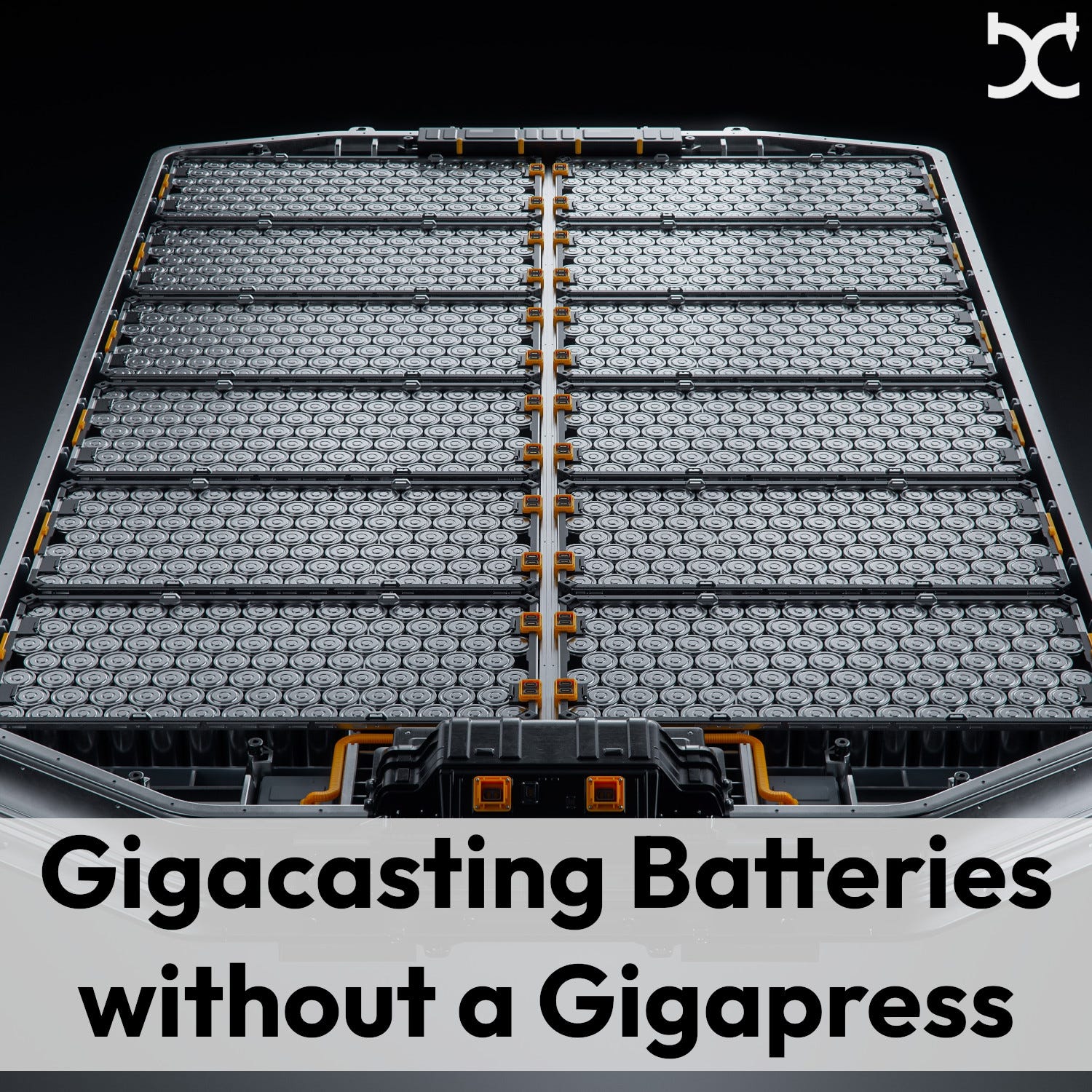
The race to electrify the roads has never been more intense. Every automaker is looking for that competitive edge. For many, the next frontier is casting large, leak-tight battery boxes. Traditionally, you’d think you need a massive 6100-ton or bigger die-casting machine to achieve these castings. That is at least what the battery manufacturers require. However, the Megacasting capacity in Europe is not given. But thanks to Rheocasting, you can deliver leak-tight battery housings on a 4400-ton machine or even smaller.
The leak-tight Requirement
Battery castings are among the most demanding parts in automotive manufacturing. They often have thick walls, 5 mm or more, that need to withstand extreme conditions. And here’s the catch: They must be absolutely leak-tight to protect the battery cells, the environment, and the people driving over them.
In standard High-Pressure Die-Casting, you fill the die with fully liquid aluminium. The metal’s solidification shrinkage (6.6% from liquid to solid) can create porosities. All this results in potential leaks you might only discover after all production steps (casting, trimming, heat treatment, straightening, machining) are completed. If the final part fails, an impregnation repair process might patch some spots but not all. Worse yet, some castings must be scrapped entirely, destroying your margins.
Enter Rheocasting
With Rheocasting, you’re no longer pouring fully liquid metal. Instead, you use a semi-solid slurry containing solid globulites that reduce overall shrinkage. This thixotropic slurry flows beautifully under shear forces. Gone are long dendrites that block feeding. The result? Near-pore-free microstructures and fewer repairs or scrap parts. That’s more profit in your pocket and higher confidence in your casting quality.
Leak-tightness isn’t Rheocasting’s only party trick; it also allows you to reduce the size of your die-casting machine by around 30% compared to HPDC. Conventional HPDC needs higher clamping forces to manage large projected areas at high metal pressures.
Still not convinced? Consider this: investing in one mega-machine ties up both capital and floor space. Multiple, maybe already existing, medium-sized machines using Rheocasting can achieve an even greater output. You spread your risk, streamline maintenance, and keep operating costs manageable.
Ready to Scale Down and Power Up?
Rheocasting is more than a production hack; it’s a strategic pivot toward lower investments, advanced process control, and better parts. Whether you’re a foundry producing EV battery housings or an OEM looking to secure a supply, switching from HPDC to Rheocasting can be a game-changer.
At Casting-Campus GmbH, we guide you through every phase, from concept to casting, so that you can bring leak-tight battery enclosures to life. Schedule a free consultation below to start your Rheocasting journey. Your bottom line and your customers will thank you.
Let’s talk about Gigacastings in Kassel⚒️

The foundry world made Kassel the Epicenter of Gigacastings. Therefore, Casting-Campus GmbH will attend the Global GIGA-Casting Congress on March 5-6, 2025.
The congress offers a fantastic agenda, featuring keynote presentations from car makers like Ford Motor Company, Volvo Cars, Volkswagen, Honda, and BMW. You also get a view on the Giga- or Megacasting from Viami International Inc., Bühler AG, Albert Handtmann Metallgusswerk GmbH & Co. KG, Laubinger + Rickmann GmbH & Co. KG, and many more.
Several hundred people will be there to follow the presentations. Fabian Niklas looks forward to this exchange among friends and colleagues in the industry and making new connections. Let’s talk about the future of the HPDC industry and how to utilise Rheocasting.
A special thank you to Prof. Fehlbier and the GTK – Fachgebiet für Gießereitechnik for organising such an event!
For more information, check out the event website. See you in Kassel!
How to make an awesome Conference Presentation⚒️
Presenting at a foundry conference is an honour. It can be an excellent opportunity to showcase innovations, share knowledge, and build valuable industry connections. However, so many presentations fail to engage the audience due to common mistakes such as overwhelming technical jargon, lack of storytelling, or a dull introduction. Let’s explore how to deliver a compelling presentation that keeps your audience engaged while avoiding the most frequent pitfalls.
One of the biggest mistakes is spending the first five minutes talking about your company’s history, locations, and customers. Most attendees either know you already or don’t care about this! If they want company details, they can check the website.
Then, in the presentation, many presenters bombard the audience with detailed graphs, numbers, and technical descriptions without providing context.
And to top it all off, they use a lot of buzzwords and industry jargon. While foundry professionals understand technical terms, overloading your speech with corporate buzzwords and complicated terminology makes it difficult to follow.
Our 5 Steps for a great Conference Presentation
Hook the Audience in the First Six Seconds
Attention spans are short. Open with an engaging story, question, or surprising fact that makes people curious. For example, instead of “Today I’ll present our new casting technology,” say, “Did you know that a minor change in temperature control can double the lifespan of your casting tools?”Follow the Five-Step Storytelling Framework
To keep your presentation structured and engaging, use this classic rhetorical method:1. Introduction – Be humble, relatable, and quickly introduce yourself in a way that builds connection.
2. Setting the Stage – Define the problem or industry challenge you’re addressing.
3. Present the Solution – Explain your innovation, keeping it simple and focused on benefits.
4. Counter Objections – Anticipate and address doubts before the audience even raises them.
5. Closing Statement – End with a powerful message that sticks in their minds.Keep It Simple, Stupid (The K.I.S.S. Principle)
Use clear, simple language and focus on the essential message rather than overwhelming the audience with excessive details. Instead of saying, “Our machine has 32 axes and 42 rotational configurations,” explain, “Our machine simplifies complex casting processes, reducing production time by 30%.”Engage the Audience with Visuals and Demonstrations
Instead of cramming slides with text, use images, videos, and real-world examples to illustrate your points. If possible, show a live demonstration or case study to make the impact of your solution tangible.Encourage Questions and Follow-Up Discussions
Your presentation shouldn’t be a monologue. Encourage interaction by inviting questions or suggesting a follow-up discussion over coffee. This makes your presentation feel more personal and engaging.
Conclusion
A great foundry conference presentation isn’t about showing off how much you know. It’s about delivering value to the audience in a clear, engaging, and memorable way. By avoiding common pitfalls and applying storytelling, simplicity, and audience-focused messaging, you can leave a lasting impression and make your presentation truly impactful.
Thank you for listening. We’ll see you in the next episode, where we’ll continue to bring you the latest insights and updates from the casting world. Don’t forget to ask questions, comment, or suggest future episodes.
Offers from Casting-Campus GmbH
Casting-Campus is all about helping you acquire new business through intelligent solutions, new technologies like Rheocasting, and sustainability.
Our services start in positioning your foundry. The next steps are to find unique solutions to market to existing and new customers and generate new profitable castings. In the meantime, we will improve your internal processes to accommodate the new solutions in your foundry. During the sampling process, we’re by your side, pushing the buttons to deliver the properties promised in the development process
Workshops on HPDC process optimization, Rheocasting and Sustainability
Business Development to acquire new Customers in the Foundry Industry
Strategy Development for Rheocasting and Sustainable Castings
Casting Experts on Demand - The Netflix of Knowledge
Support for part development: address casting issues early in the design process
Cut Energy costs and produce Sustainable Castings
If this sounds appealing to you, visit the website for more information on the Consulting Services and schedule a Free Consultation Call. Let’s discuss what is the right solution for your topic of interest:
Historical Post
A weekly reminder of an old but gold article
Secret to Balancing Performance and Sustainability⚒️
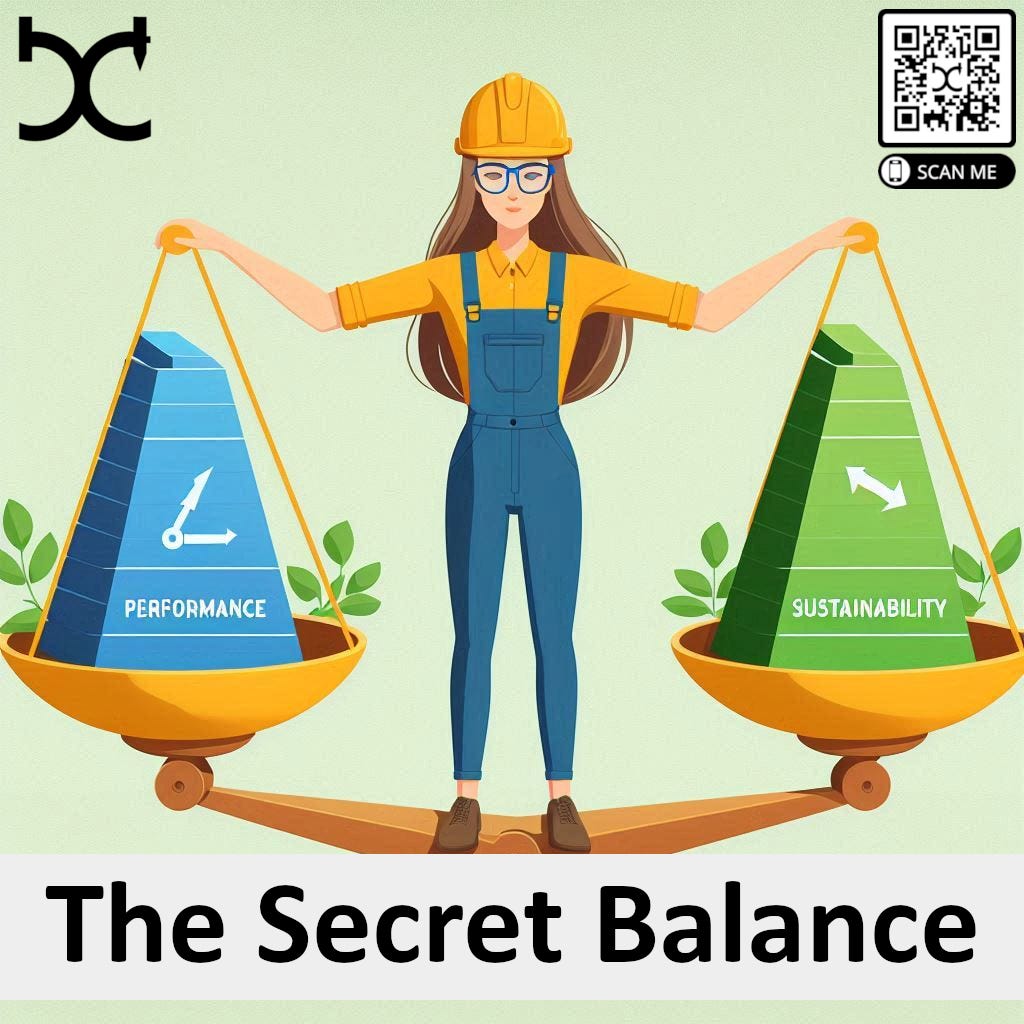
The trend towards electrification is reshaping industries like automotive and telecommunications. Electric vehicles (EVs) and high-performance electronics require materials that manage heat effectively, ensuring reliability and efficiency. Moreover, reducing weight is crucial for extending the range of EVs and improving device energy efficiency. Aluminium alloys offer an excellent solution, but the key to maximizing their benefits is selecting the correct alloying elements and casting method.
Embracing Higher Iron Content for Sustainability
Iron (Fe) in aluminium alloys has traditionally been viewed cautiously due to its potential to reduce thermal conductivity. However, a nuanced approach reveals several sustainability advantages associated with higher iron content:
Recyclability: Iron is abundant and widely recycled, reducing the need for primary material extraction and enhancing the alloy's overall sustainability.
Cost-Effectiveness: Incorporating more iron can lower production costs, making the material more affordable and accessible for various applications.
Strength and Durability: Higher iron content can improve the mechanical properties of aluminium alloys, enhancing their durability and lifespan. This contributes to sustainability by reducing the frequency of replacements and repairs.
Understanding Thermal Conductivity
Thermal conductivity in metals primarily depends on the movement of free electrons. In aluminium alloys, this is complemented by lattice vibrations (phonons). Alloying elements can disrupt the lattice, scatter electrons and reduce thermal conductivity. Therefore, choosing elements that minimize lattice distortion is crucial for maintaining high thermal conductivity.
The Wiedemann-Franz law provides a valuable link between electrical and thermal conductivity, enabling predictions of thermal performance based on electrical resistivity. This relationship is instrumental in developing alloys with optimized thermal properties.
Microstructural Considerations
The microstructure of aluminium alloys, influenced by casting and heat treatment, significantly affects thermal conductivity. Instead of foreign atoms introducing lattice distortions, phases formed during casting enhance conductivity due to their unique structure. These phases act like a vacuum system, sucking in other elements from the lattice. Heat treatment can further refine the microstructure, impacting thermal performance.
Controlling microstructural features is vital for developing high-performance, sustainable aluminium alloys. Microporosity from a dendritic casting process is a barrier, significantly impacting heat transfer from one grain to another.
Conclusion
Therefore, low silicon (2–3%) and high iron (0.5–1%) alloys deliver the highest thermal properties and the lowest carbon footprint. And, Rheocasting is the only way to cast them to ensure a poros-free microstructure. Now you know how to get the best thermal management for power-hungry electronics.